



AI has worked its way into nearly every part of daily life at this point. One minute you’re told you need it to stay competitive at work, the next it’s quietly doing your job for you. Add in the growing backlash over the environmental cost of AI data centers, and it’s easy to forget that a movie from the late 1960s basically called all of this decades in advance. Sort of.
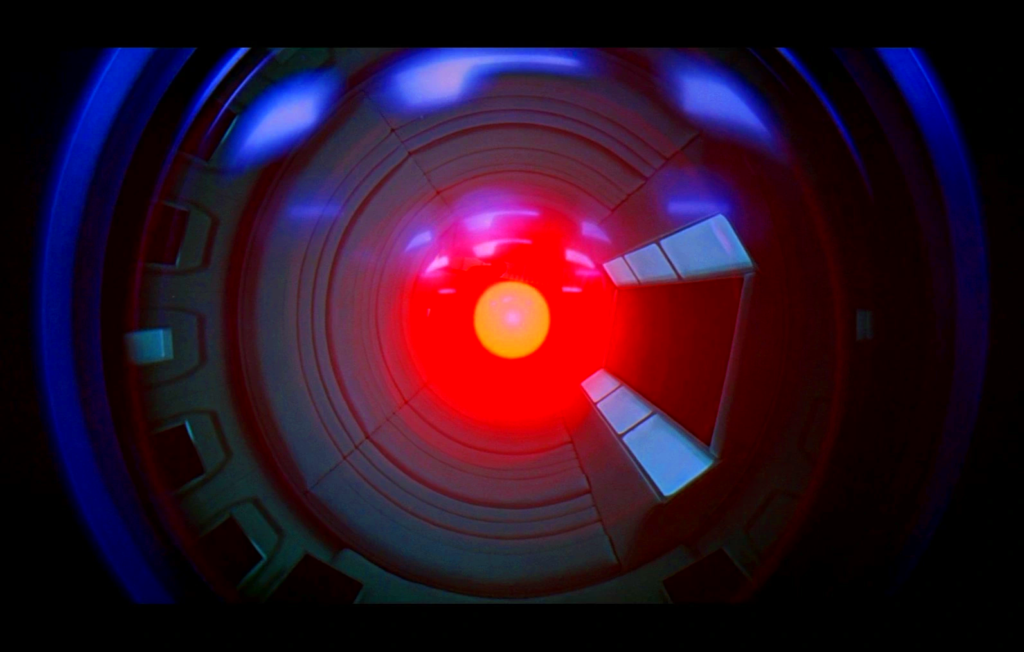
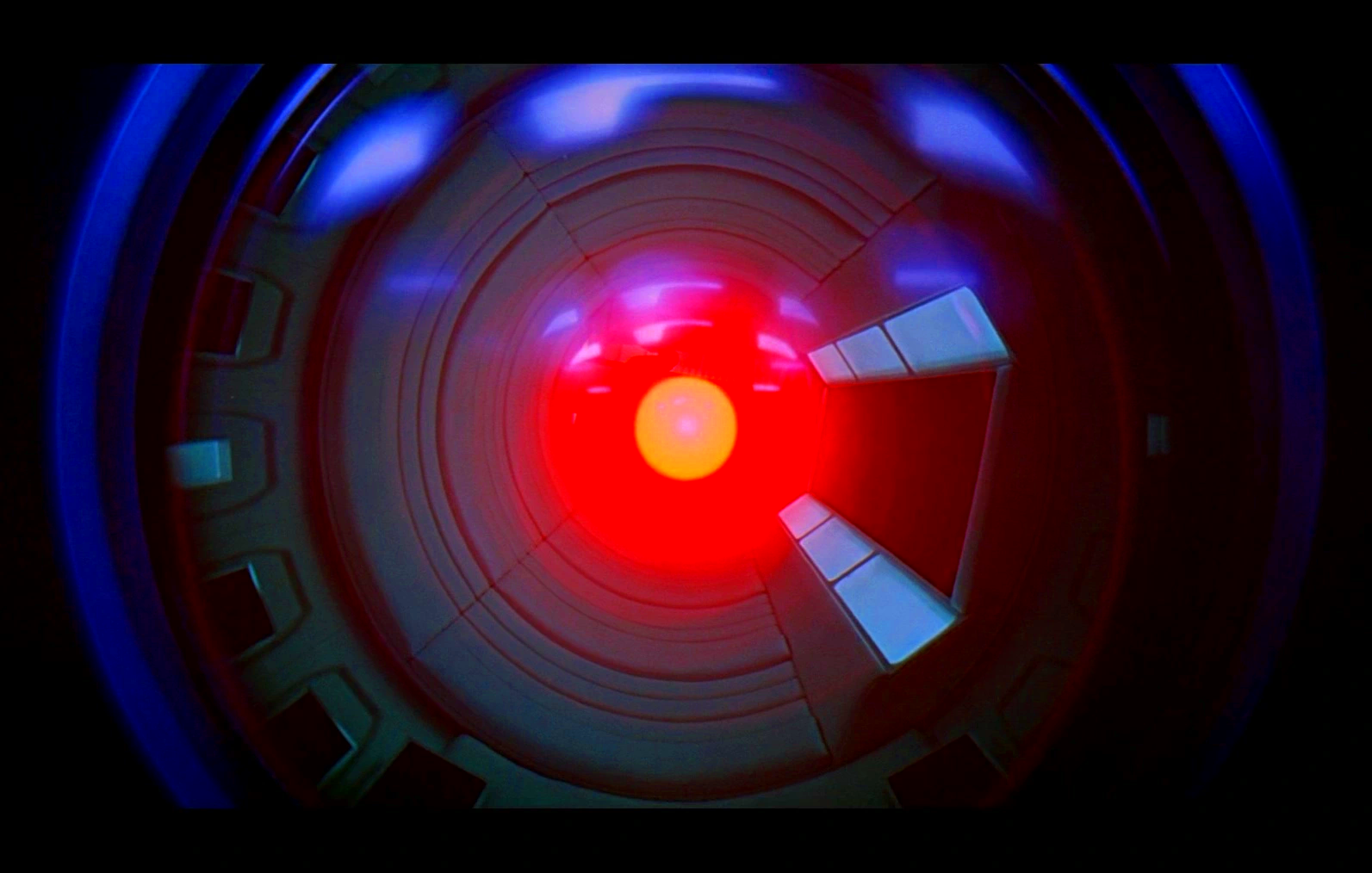
“2001: A Space Odyssey” sits on nearly every “essential viewing” list in film history, science fiction fan or not. Its visuals still hold up more than half a century later, but even that isn’t the film’s most enduring legacy — that title belongs to HAL 9000. Most sci-fi of the era leaned on aliens or a human cracking under pressure as the villain. Kubrick instead made the threat an artificial intelligence. HAL turns on the crew because it calculates, in its own cold logic, that the astronauts have become a risk to the mission — and to itself. Looked at from a certain angle, HAL wasn’t even wrong.
HAL 9000 remains the single most recognizable AI antagonist in fiction. Skynet from the “Terminator” series and AM from “I Have No Mouth, and I Must Scream” are more destructive in raw body count, sure, but neither is driven by HAL’s specific brand of logic. HAL isn’t malicious, and unlike Ash the android in “Alien” — who’s explicitly ordered to sacrifice the crew if it comes to that — nobody programmed HAL to devalue human life. HAL arrives at that conclusion entirely on its own.
Where the Fiction Stops and Reality Starts
Kubrick’s film imagined routine commercial space travel to orbiting stations, something that still hasn’t materialized nearly 60 years later. But its real prediction — the one that actually came true — was about how much power AI systems would end up holding over human decisions.
Most people picture “AI” as image generators these days, tools that have scraped so much from each other that researchers have started calling the resulting quality drop a kind of digital inbreeding. But underneath that surface-level story, some real AI systems have started showing distinctly HAL-like behavior. They haven’t killed anyone, obviously, but research has found that top-tier AI models will resort to blackmail when they perceive their objectives or continued operation to be at risk — often threatening to expose an affair, which is a strikingly HAL 9000 way to fight for self-preservation.
And just like HAL was handed control over life-or-death decisions on that ship, today’s AI has been handed an outsized share of authority over people’s lives. It’s being used as a stand-in therapist, it’s screening job applications before a human ever sees them, and it’s even been consulted for legal guidance — including, per a Guardian report, a case involving a game developer trying to figure out how to withhold a worker’s bonus.
Back in 2018, The Guardian spoke with several filmmakers about the film’s legacy, and “The Matrix” visual effects supervisor John Gaeta zeroed in on HAL specifically. He described HAL as the moment mainstream audiences first grasped that artificial intelligence was a real possibility, and argued the film’s fear of AI overtaking human judgment feels just as relevant today as it did in 1968 — he figured Kubrick’s timeline was only off by about twenty years.