



Hidden cameras are becoming a growing problem: they're hidden in glasses, watches, pens, and, most often, in hotels and rental apartments. Engineers from the Korea Advanced Institute of Science and Technology (KAIST) have come up with a simple solution. They've created the SweepLED system, which turns a smartphone into a hidden camera detector.
Conventional detectors work on a simple principle: you shine a light and look for a bright glare. However, these reflections are not only reflected by lenses, but also by glass, metal, and plastic. So, you have to guess what exactly is in front of you.
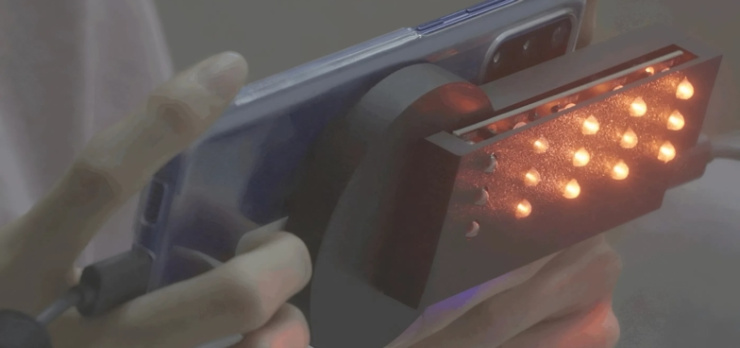
SweepLED eliminates this uncertainty. The system works not with glare, but by scanning light. It attaches to a case and uses the phone's camera. Simply point it at a suspicious object and hold it there while LEDs illuminate it from different angles. The lens reflects light in a unique way: thanks to the aperture, sensor, and laminated glass, its glare changes with the angle. Regular surfaces don't have this effect.
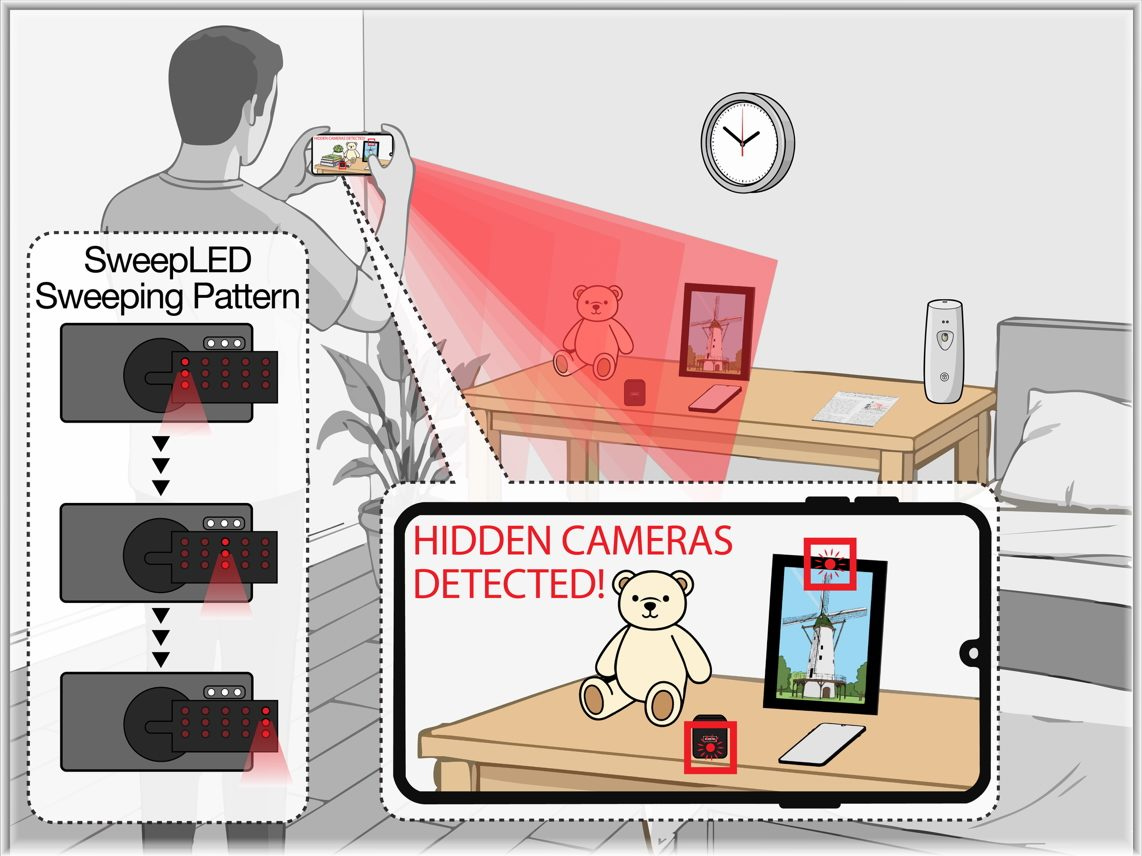
The scanning process is recorded on video, which is then analyzed by AI. It recognizes characteristic distortions and pinpoints the camera's location.
The researchers tested the system on 30 common objects found in any hotel room or rental apartment, and its accuracy was approximately 94%. Scanning each object takes less than five seconds.
It's not a finished product yet, but the idea itself is simple enough to one day become a mass-market gadget.
Conventional detectors work on a simple principle: you shine a light and look for a bright glare. However, these reflections are not only reflected by lenses, but also by glass, metal, and plastic. So, you have to guess what exactly is in front of you.
SweepLED eliminates this uncertainty. The system works not with glare, but by scanning light. It attaches to a case and uses the phone's camera. Simply point it at a suspicious object and hold it there while LEDs illuminate it from different angles. The lens reflects light in a unique way: thanks to the aperture, sensor, and laminated glass, its glare changes with the angle. Regular surfaces don't have this effect.
The scanning process is recorded on video, which is then analyzed by AI. It recognizes characteristic distortions and pinpoints the camera's location.
The researchers tested the system on 30 common objects found in any hotel room or rental apartment, and its accuracy was approximately 94%. Scanning each object takes less than five seconds.
It's not a finished product yet, but the idea itself is simple enough to one day become a mass-market gadget.