



Perplexity has officially brought its AI-powered browser, Comet, to the iPhone as a standalone app, pushing the fast-growing AI browser category further into Apple’s mobile ecosystem. The move comes after the browser’s Android rollout and marks a notable shift in accessibility: while Perplexity Max still costs $200 per month, Comet itself is now being positioned much more broadly on mobile.
That matters, because AI browsers are no longer just a niche experiment for early adopters. They are starting to look like a serious alternative to the traditional browser model—especially for people who spend a lot of time researching, comparing, summarizing, and juggling tabs all day.
Why AI browsers like Comet are suddenly gaining traction
At its core, Perplexity built its reputation as an AI-powered answer engine: something that searches the web in real time, pulls from multiple sources, and returns concise responses with citations. Instead of forcing users to bounce between ten tabs and piece everything together themselves, it tries to do the synthesis for them. Perplexity describes its search product as a real-time, cited answer experience, and Comet extends that philosophy into the browser itself.

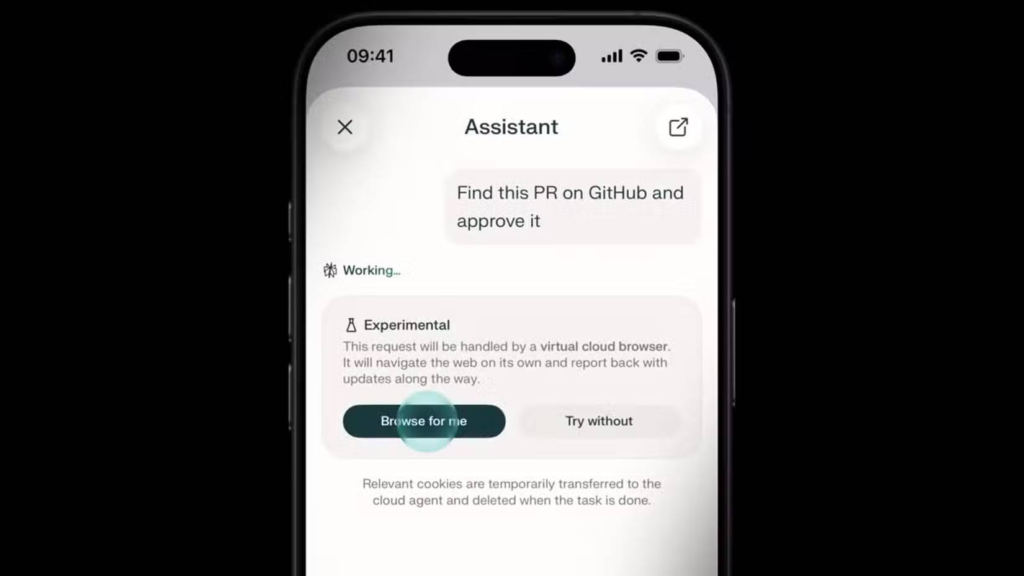
That is the real pitch behind Comet. It is not just a browser with a chatbot attached to the side. It is a browser built around the idea that AI should actively help you move through the web, understand what you are looking at, and in some cases even take action for you.
Comet can summarize pages, answer questions about what is on your screen, help organize research across tabs, and assist with repetitive online tasks. Perplexity’s own product pages frame it as a “personal assistant” that can automate busywork, organize email, and help users move faster online.
That “agentic” layer is what makes AI browsers feel different from older browsers that simply bolt on AI as an extra feature. With Chrome or Edge, AI often feels like an add-on. With Comet, the assistant is much closer to the core experience. For people doing research-heavy work, that makes a real difference: asking questions across open tabs, getting instant summaries, and reducing the friction of constant context switching can make the browser feel more like a working partner than a passive tool.
Why some people may prefer it to Safari
Safari is fast, polished, and deeply integrated into Apple’s ecosystem. But for many users, it still behaves like a traditional browser in a world that is quickly becoming AI-assisted.
Comet is betting on a different future.
Rather than focusing only on loading pages cleanly, it tries to help after the page loads: summarizing articles, helping with comparison shopping, pulling insights from multiple sources, and acting more like a research assistant than a plain browser. That is the part that could make it genuinely appealing to iPhone users who already rely on AI tools throughout the day.
It also helps that Comet on iPhone can be set as the default browser, which lowers the barrier for people who want to try living with an AI-first browser full time. Reports on the iPhone launch also note that the app follows Apple’s current design language and brings a more native feel than some users may expect from an outside browser.
The trade-offs are real
None of this means Comet is a perfect Safari replacement.
On iOS, all browsers still have to operate within Apple’s platform rules, which means Comet cannot completely reinvent the underlying browsing engine. It also does not support third-party extensions on iPhone, which immediately limits its appeal for some power users.
There are also broader concerns that come with AI agents acting on a user’s behalf. The more control an AI assistant has over tabs, forms, shopping flows, and email-like workflows, the more important trust becomes. If the assistant misunderstands context, follows bad information, or is manipulated by a malicious site, the consequences are more serious than a wrong summary—they can become security and reliability problems. Recent legal reporting around Amazon’s challenge to Perplexity’s shopping agent highlights how contentious and sensitive agentic browsing has already become.
Privacy is another issue that will not go away. Perplexity’s CEO previously said one reason for building a browser was to understand more about user behavior beyond the app itself, partly to support better ad targeting. That statement triggered predictable concern, because once a browser becomes the place where AI sees your tabs, habits, and workflow, the privacy stakes become much higher.
The bigger question
With Comet now available on iPhone, Android, and desktop platforms, Perplexity is clearly trying to move beyond being “just” an answer engine and become the layer that sits between users and the web itself. Perplexity’s own materials now list Comet alongside its iPhone app, Android app, and desktop experiences, showing that the company sees this as a cross-platform product, not a side project.
The real question is not whether AI browsers are coming. They already are.
The real question is whether users are ready to hand over more of the browsing process to AI in exchange for speed, convenience, and less friction. For some people, especially those buried in research, tab overload, and repetitive online tasks, Comet may already feel like a glimpse of what browsing is going to become.
And that is exactly why Safari may finally have a real challenger—not because Comet is more traditional, but because it is willing to be something else entirely.





'%3e%3cg id='Final-Copy-2_2_' transform='translate(1275.000000, 200.000000)'%3e%3cpath class='st0' d='M7.4,12.8h6.8l3.1-11.6H7.4C4.2,1.2,1.6,3.8,1.6,7S4.2,12.8,7.4,12.8z'/%3e%3c/g%3e%3c/g%3e%3c/g%3e%3cg id='final---dec.11-2020'%3e%3cg id='_x30_208-our-toggle' transform='translate(-1275.000000, -200.000000)'%3e%3cg id='Final-Copy-2' transform='translate(1275.000000, 200.000000)'%3e%3cpath class='st1' d='M22.6,0H7.4c-3.9,0-7,3.1-7,7s3.1,7,7,7h15.2c3.9,0,7-3.1,7-7S26.4,0,22.6,0z M1.6,7c0-3.2,2.6-5.8,5.8-5.8 h9.9l-3.1,11.6H7.4C4.2,12.8,1.6,10.2,1.6,7z'/%3e%3cpath id='x' class='st2' d='M24.6,4c0.2,0.2,0.2,0.6,0,0.8l0,0L22.5,7l2.2,2.2c0.2,0.2,0.2,0.6,0,0.8c-0.2,0.2-0.6,0.2-0.8,0 l0,0l-2.2-2.2L19.5,10c-0.2,0.2-0.6,0.2-0.8,0c-0.2-0.2-0.2-0.6,0-0.8l0,0L20.8,7l-2.2-2.2c-0.2-0.2-0.2-0.6,0-0.8 c0.2-0.2,0.6-0.2,0.8,0l0,0l2.2,2.2L23.8,4C24,3.8,24.4,3.8,24.6,4z'/%3e%3cpath id='y' class='st3' d='M12.7,4.1c0.2,0.2,0.3,0.6,0.1,0.8l0,0L8.6,9.8C8.5,9.9,8.4,10,8.3,10c-0.2,0.1-0.5,0.1-0.7-0.1l0,0 L5.4,7.7c-0.2-0.2-0.2-0.6,0-0.8c0.2-0.2,0.6-0.2,0.8,0l0,0L8,8.6l3.8-4.5C12,3.9,12.4,3.9,12.7,4.1z'/%3e%3c/g%3e%3c/g%3e%3c/g%3e%3c/g%3e%3c/svg%3e)


0 comments