 Technology
 Science
 Animals
 Learning & Knowledge
 Life & Discovery
 Smart Buying
 Q&A
Q&A
One day, the Sun will die. Our brilliant star cannot shine forever.
After billions of years of producing energy through nuclear fusion, the elements that fuel the Sun’s reactions will eventually run out. Once that happens, the Sun will go through a dramatic transformation before ending its life as a white dwarf. And in the process, the inner planets of the Solar System, including Earth, will pay a heavy price.

When the Sun can no longer generate enough energy to resist its own gravity, its core will collapse while its outer layers expand outward, turning it into a red giant. At that stage, its radius could stretch as far as Mars. After shedding its outer material, all that will remain is the dense core — the stellar remnant of what was once a full-sized star. By then, the Sun will be smaller than Earth and will emit only leftover heat.
Scientists have long predicted this dramatic fate for the Sun, which is expected to unfold roughly 5 billion years from now. But what happens to the planets when that time comes? What happens to Earth?
Physicist Amornrat Aungwerojwit of Naresuan University in Thailand and a team of researchers analyzed long-term brightness changes in three white dwarfs and used that data to infer what such changes could mean for the planetary systems orbiting them.
The good news is that humanity almost certainly will not be around on Earth by then — at least not in its current form. If humans still exist, they will most likely be living somewhere else in the universe. Our planet, along with the rest of the Solar System, will not escape unscathed. Based on what scientists have learned from white dwarfs, the Sun’s death is likely to bring widespread destruction to the Solar System.
In simple terms, Mercury and Venus are expected to disappear, along with other objects in the inner Solar System. Their final fate would be to spiral inward as their distances from the expanding Sun shrink, until they are torn apart or swallowed whole.
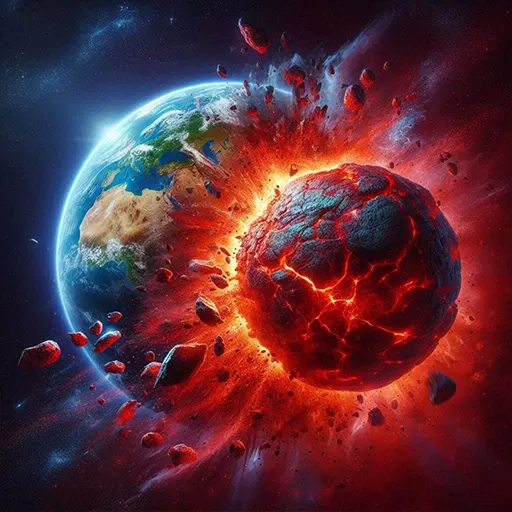
Earth, however, is less certain. Its survival may depend on how its orbit changes as the Sun loses mass and as gravitational interactions between the planets shift over time. Even if Earth narrowly avoids being swallowed by the Sun, it would be nothing like the lush, life-friendly world we know today.
Physicist Boris Gänsicke of the University of Warwick in England explained it this way: “Whether Earth can move outward fast enough before the Sun expands enough to engulf and burn it remains unclear. But even if Earth avoids being swallowed, its atmosphere would be stripped away, its oceans would completely evaporate, and it would no longer be a pleasant place to live.”
So how do scientists know all of this just by studying white dwarfs?
The answer lies in changes in their brightness.
A star’s flickering light can reveal a great deal. If the dimming and brightening happen regularly, it may indicate that something is orbiting the star and periodically blocking part of its light.
The three stars examined in this latest study showed brightness changes that previous research had already linked to clouds of planetary debris orbiting around them.
Aungwerojwit explained: “Previous studies have shown that when asteroids, moons, and planets get too close to white dwarfs, the intense gravity of the star tears these smaller bodies apart into smaller and smaller pieces.”
By studying 17 years of valuable data on the three white dwarfs, the researchers were able to build a clearer picture of how this process unfolds. All three stars showed gradual changes in brightness consistent with the idea that they were surrounded by vast clouds of debris — planetary material being crushed into finer and finer dust before disappearing altogether, likely because the dust and rock were eventually pulled into the white dwarf itself.
One of the stars showed signs of a catastrophic event in 2010. Another appeared to go through a similar event in 2015. The third displayed unusual dimming events every few months, along with chaotic fluctuations on timescales of just a few minutes. All three stars have now returned to normal, with the brightness changes no longer taking place.
That suggests the process of a dying star tearing apart and consuming planetary material can happen relatively quickly. But if Earth does meet such a destructive end, it probably will not feel especially tragic to any witnesses — because by then, Earth itself would already be a ruined world.
Gänsicke put it bluntly: “The bad news is that Earth will probably be swallowed by the expanding Sun before it ever becomes a white dwarf. As for the rest of the Solar System, some asteroids between Mars and Jupiter, and possibly even some of Jupiter’s moons, could be knocked out of their orbits, move close enough to the white dwarf, and then be shredded apart in the same way we have studied.”
Still, there is no reason to worry for humanity on that timescale. Earth’s oceans are expected to boil away in about 1 billion years — long before the Sun reaches its final death throes.
After billions of years of producing energy through nuclear fusion, the elements that fuel the Sun’s reactions will eventually run out. Once that happens, the Sun will go through a dramatic transformation before ending its life as a white dwarf. And in the process, the inner planets of the Solar System, including Earth, will pay a heavy price.
When the Sun can no longer generate enough energy to resist its own gravity, its core will collapse while its outer layers expand outward, turning it into a red giant. At that stage, its radius could stretch as far as Mars. After shedding its outer material, all that will remain is the dense core — the stellar remnant of what was once a full-sized star. By then, the Sun will be smaller than Earth and will emit only leftover heat.
Scientists have long predicted this dramatic fate for the Sun, which is expected to unfold roughly 5 billion years from now. But what happens to the planets when that time comes? What happens to Earth?
Physicist Amornrat Aungwerojwit of Naresuan University in Thailand and a team of researchers analyzed long-term brightness changes in three white dwarfs and used that data to infer what such changes could mean for the planetary systems orbiting them.
The good news is that humanity almost certainly will not be around on Earth by then — at least not in its current form. If humans still exist, they will most likely be living somewhere else in the universe. Our planet, along with the rest of the Solar System, will not escape unscathed. Based on what scientists have learned from white dwarfs, the Sun’s death is likely to bring widespread destruction to the Solar System.
In simple terms, Mercury and Venus are expected to disappear, along with other objects in the inner Solar System. Their final fate would be to spiral inward as their distances from the expanding Sun shrink, until they are torn apart or swallowed whole.
Earth, however, is less certain. Its survival may depend on how its orbit changes as the Sun loses mass and as gravitational interactions between the planets shift over time. Even if Earth narrowly avoids being swallowed by the Sun, it would be nothing like the lush, life-friendly world we know today.
Physicist Boris Gänsicke of the University of Warwick in England explained it this way: “Whether Earth can move outward fast enough before the Sun expands enough to engulf and burn it remains unclear. But even if Earth avoids being swallowed, its atmosphere would be stripped away, its oceans would completely evaporate, and it would no longer be a pleasant place to live.”
So how do scientists know all of this just by studying white dwarfs?
The answer lies in changes in their brightness.
A star’s flickering light can reveal a great deal. If the dimming and brightening happen regularly, it may indicate that something is orbiting the star and periodically blocking part of its light.
The three stars examined in this latest study showed brightness changes that previous research had already linked to clouds of planetary debris orbiting around them.
Aungwerojwit explained: “Previous studies have shown that when asteroids, moons, and planets get too close to white dwarfs, the intense gravity of the star tears these smaller bodies apart into smaller and smaller pieces.”
By studying 17 years of valuable data on the three white dwarfs, the researchers were able to build a clearer picture of how this process unfolds. All three stars showed gradual changes in brightness consistent with the idea that they were surrounded by vast clouds of debris — planetary material being crushed into finer and finer dust before disappearing altogether, likely because the dust and rock were eventually pulled into the white dwarf itself.
One of the stars showed signs of a catastrophic event in 2010. Another appeared to go through a similar event in 2015. The third displayed unusual dimming events every few months, along with chaotic fluctuations on timescales of just a few minutes. All three stars have now returned to normal, with the brightness changes no longer taking place.
That suggests the process of a dying star tearing apart and consuming planetary material can happen relatively quickly. But if Earth does meet such a destructive end, it probably will not feel especially tragic to any witnesses — because by then, Earth itself would already be a ruined world.
Gänsicke put it bluntly: “The bad news is that Earth will probably be swallowed by the expanding Sun before it ever becomes a white dwarf. As for the rest of the Solar System, some asteroids between Mars and Jupiter, and possibly even some of Jupiter’s moons, could be knocked out of their orbits, move close enough to the white dwarf, and then be shredded apart in the same way we have studied.”
Still, there is no reason to worry for humanity on that timescale. Earth’s oceans are expected to boil away in about 1 billion years — long before the Sun reaches its final death throes.