

Taiwan’s Delta Energy Management Company recently unveiled an interesting study on Wi-Fi networks at the Computex exhibition in Taipei. The report suggests that in the future, Wi-Fi networks could track our vital signs.
At the exhibition, Dr. Tzi-cker Chiueh at Delta’s research center demonstrated how algorithms can analyze interruptions in Wi-Fi signals to detect breathing rates and even heart rate.
This is because current Wi-Fi is quite sensitive to small movements and changes in the surrounding environment. Delta precisely measured the travel time and angle of arrival of Wi-Fi signals reflecting in a room to create algorithms that can track breathing with high accuracy.

Chiueh claims that its algorithm for estimating breathing rate using Wi-Fi signals can achieve up to 95% accuracy when measuring within a 5-meter range, while heart rate measurement has 83% accuracy at a distance of 1 meter.
He showed a video demonstrating how this technology can use Wi-Fi signals from two smartphones to differentiate the sleeping states of two people based on their breathing patterns and body movements.
If this technology appears on smartphones, it will be revolutionary; we will no longer need to buy wearable devices to monitor our health.
However, Dr. Chiueh hopes this technology can be applied on a larger scale. He suggests that Wi-Fi access points could be used as an alternative to expensive, specialized medical equipment for monitoring patients in hospitals or the elderly in nursing homes.
This technology could also be applied in situations where children and pets are left in vehicles, posing a life-threatening danger.
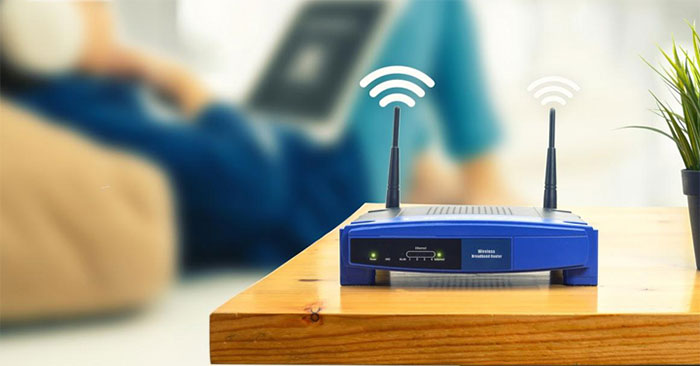
Beyond healthcare and safety, Delta claims its new Wi-Fi findings could optimize network performance in challenging environments by changing access points when it detects physical changes that could degrade the network signal.







'%3e%3cg id='Final-Copy-2_2_' transform='translate(1275.000000, 200.000000)'%3e%3cpath class='st0' d='M7.4,12.8h6.8l3.1-11.6H7.4C4.2,1.2,1.6,3.8,1.6,7S4.2,12.8,7.4,12.8z'/%3e%3c/g%3e%3c/g%3e%3c/g%3e%3cg id='final---dec.11-2020'%3e%3cg id='_x30_208-our-toggle' transform='translate(-1275.000000, -200.000000)'%3e%3cg id='Final-Copy-2' transform='translate(1275.000000, 200.000000)'%3e%3cpath class='st1' d='M22.6,0H7.4c-3.9,0-7,3.1-7,7s3.1,7,7,7h15.2c3.9,0,7-3.1,7-7S26.4,0,22.6,0z M1.6,7c0-3.2,2.6-5.8,5.8-5.8 h9.9l-3.1,11.6H7.4C4.2,12.8,1.6,10.2,1.6,7z'/%3e%3cpath id='x' class='st2' d='M24.6,4c0.2,0.2,0.2,0.6,0,0.8l0,0L22.5,7l2.2,2.2c0.2,0.2,0.2,0.6,0,0.8c-0.2,0.2-0.6,0.2-0.8,0 l0,0l-2.2-2.2L19.5,10c-0.2,0.2-0.6,0.2-0.8,0c-0.2-0.2-0.2-0.6,0-0.8l0,0L20.8,7l-2.2-2.2c-0.2-0.2-0.2-0.6,0-0.8 c0.2-0.2,0.6-0.2,0.8,0l0,0l2.2,2.2L23.8,4C24,3.8,24.4,3.8,24.6,4z'/%3e%3cpath id='y' class='st3' d='M12.7,4.1c0.2,0.2,0.3,0.6,0.1,0.8l0,0L8.6,9.8C8.5,9.9,8.4,10,8.3,10c-0.2,0.1-0.5,0.1-0.7-0.1l0,0 L5.4,7.7c-0.2-0.2-0.2-0.6,0-0.8c0.2-0.2,0.6-0.2,0.8,0l0,0L8,8.6l3.8-4.5C12,3.9,12.4,3.9,12.7,4.1z'/%3e%3c/g%3e%3c/g%3e%3c/g%3e%3c/g%3e%3c/svg%3e)


0 comments